Our Experience with a Visually Impaired and Voracious Reader
Our eldest son can always be found reading a book. In my bag at any one time as I walk around, I have at least three books on me as these are his comfort items. He has a reading diary for school and I have never written the true number of books he reads in a day in there, at first because I thought the school wouldn’t believe me and now, I simply don’t have the time, energy or will to write a list of books he reads in a day. The teachers know he reads constantly, so I guess we have just got lazy. I have tried to make it his responsibility to write in his reading diary every day, but to quote him directly, “How am I supposed to remember to do that every day?”
Whenever people ask me when he started to read, I usually keep it general and vague, “He was an early reader” or I say, “About two and a half, I think.”
He started reading earlier than two and a half by the way, even though that in itself seems unbelievable, and it is catastrophically crazy that he was reading early as well as being visually impaired. I was scrolling through old videos on my phone the other day, and found one of him reading words at 18 months (‘Abracadabra’ in Meg and Mog), and another of us in December 2020, when he was about 20 months old, where is reading words from flashcards. He learnt all the letters very early as well, one of our favourite pastimes during first lockdown was reading all the letters in our neighbour’s license plates. He had to get very close to read the letters, which I am sure our neighbours thought was weird but they’ve never said anything!
When a child reads early like this, it is known as ‘hyperlexia’. It often co-occurs with ASD (but not always). My son definitely learned to read because of an intense fascination of letters and numbers, and he just seemed to memorise words to read them. He only has to read a word once to know it, and thereafter is able to spell it perfectly. Him learning to read in this way was entirely incompatible with the phonics scheme they taught at school (he could already read when he started school) and so he found Phonics lessons frustrating and boring, often telling his teachers and us how much he disliked it, I guess because he found it entirely pointless when he could already read.
Phonics skills have come in handy recently though, as he makes up his own language, which does seem to have its own sound and letter pattern scheme.
I am always reading, I have made a career out of it. In the early days with my son, a lot of my family and friends would comment that the reason he loved books and could read so early was because “he’s just like you, Gem!” or that I was teaching him to read well. And I would say that he was driving this and I actually had very little to do with it, except engaging with him. I often got the impression that people thought I was being humble or didn’t believe me; all I did in reality was live in a house full of books and read to him. He did everything else.
When he was in Reception, when he came home with wordless books, he wanted nothing to do with them. I couldn’t bribe him to look at them (and I tried.) They had no words, so to him, they were pointless. In addition to this, due to his vision, he found detailed images difficult or impossible to see, so it was so much effort for him to just focus and see what he could on the page, so he didn’t bother. He went off and read his own books with words.
Instead of teaching him to read, I have always done a lot of comprehension with him, because as much as he can always read a word, sentence and paragraph flawlessly, and often might know what a word 'meant’ in a technical way, anything about context, emotion or comprehension of a story was alien to him. Even getting him on board with the concept that there might be additional information to help him understand the story in the pictures was a struggle. Because why wouldn’t that just be in words? As time has progressed, he is getting to grips with comprehension and understanding stories, and it is great to see him now getting joy out of these parts of reading too.
There are a lot of balls to juggle for us – to balance both his visual needs and his seemingly insatiable need for a wide variety of books, knowledge and facts. For him now, keeping him interested and challenged helps us across the board: satisfying him intellectually means that his anxiety, stims and info dumping decreases and overall makes him a much happier and content soul. My often quoted line about our situation is that I have a home full to the brim of children’s books and a child who not only loved to read but seems to need to read, but over half of the books on the shelves in his home were inaccessible to him.
So there are some of ways that we’ve helped give him access to books and content, as well as developing his love of reading, learning and his overall confidence.
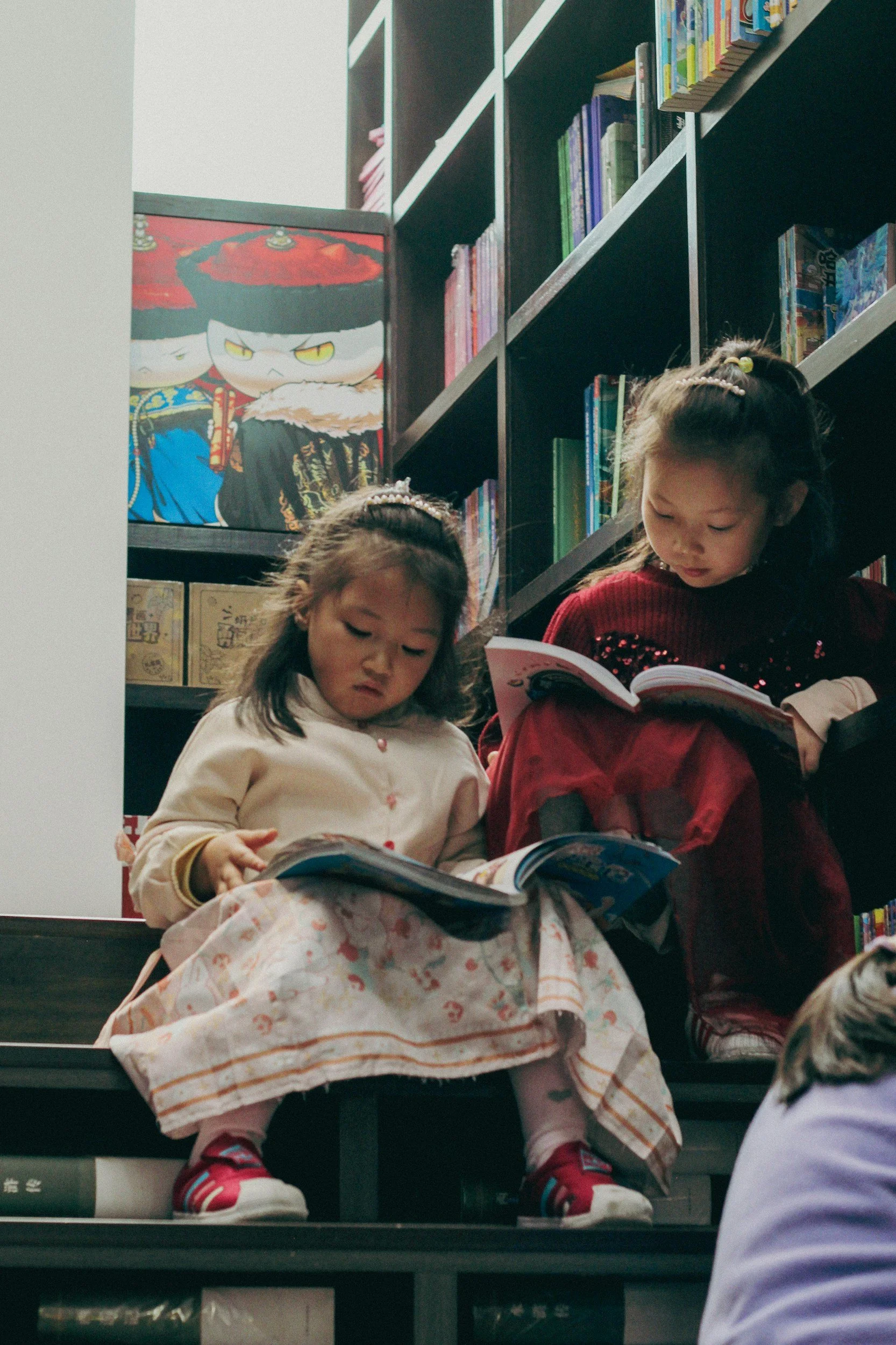
Libraries
As much as I adore libraries as a resource and urge everyone to use them so their child can have access to a huge amount of books and stories for free, personally, we have not had a lot of success with libraries.
When I first went to the library in the hope they might be able to help direct me to large print picture books for him, I was directed to the large print section which was just full of novels and books for whom the audience are older adults. It hasn’t been the first time where the visual impairment space seems to cater only to adults or the elderly, and it won’t be the last, as this is the largest demographic in the space obviously.
We got a lot of use initially out of the Early Reader range of books, as these had large, simple fonts on plain backgrounds, but after awhile, he quickly wanted more complicated books, which meant smaller font sizes, so interest in the books in the range was limited.
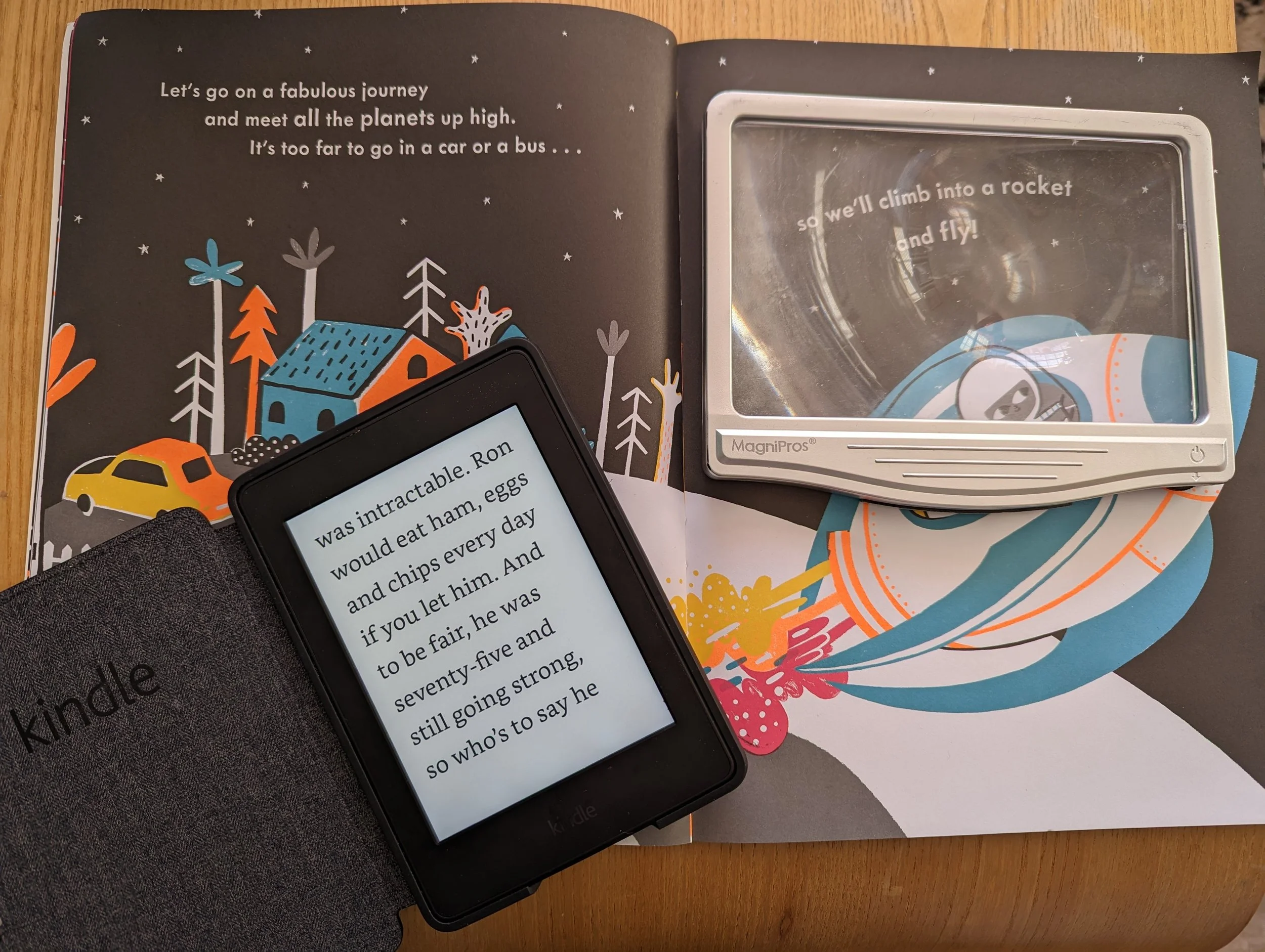
The Kindle
We bought him a Kindle, so he can adjust the text size, page brightness and colour contrast to what’s comfortable for him at any given time. An unexpected outcome with him having a Kindle was his access to looking up word definitions at whim. I caught him looking up definitions once and then continued to notice him doing it often. I think sometimes when he is ‘reading’ what he is doing is looking up definitions and learning them.
He also makes notes throughout the books, sometimes just his thoughts, sometimes he recaps what has happened. Though now he has started writing notes in his own languages, so I have no idea what they say, but my favourite ones are from a book he was reading about the history of North Korea (that’s a story for another time) and his notes were “The end of the Korean War, finally!!!” and then later, the next note read “Oh, it isn’t over.”
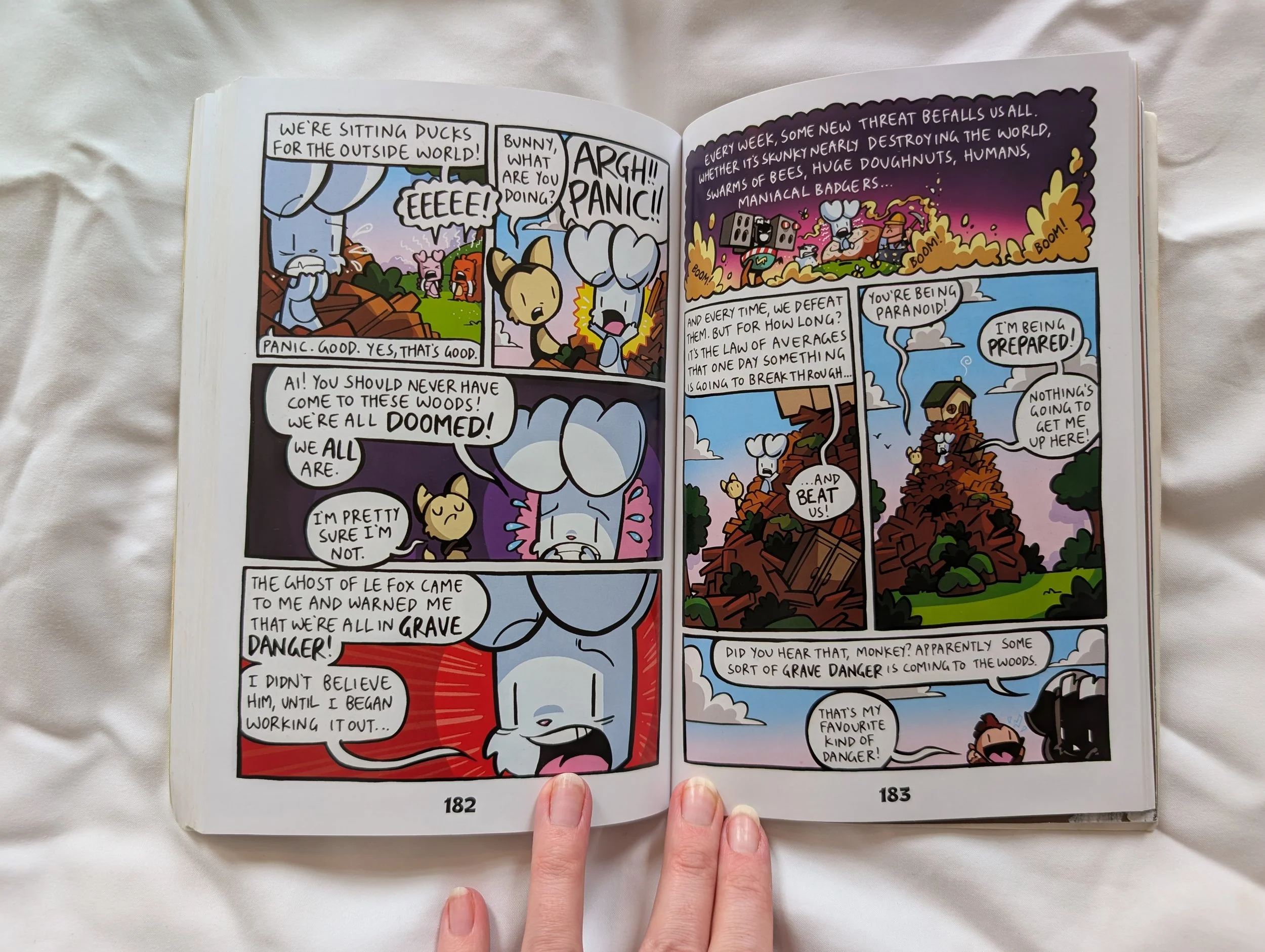
A spread from the Bunny vs Monkey series, by Jamie Smart
Comic Books
A boy that he got along with at after-school club was reading ‘Bunny v Monkey’ by Jamie Smart, and he came home and asked if he could read them too. I already had a copy of one of the books from a project I did for work, so I gave him that. I always had a feeling that he would love comic books, but the visual clutter of them and the detail in the pictures was a visual problem for him.
But his desire to read this book that his friend has recommended to him overrode all this, and he read it, and loved it. His comprehension and understanding of how the pictures related to the story, the dialogue and the context work together has improved hugely. I had to go through with him step-by-step about how picture order worked, how to read the speech bubbles in order and how to look and move his eyes across the whole page. He took all this on board and little by little, I saw his comic book reading improve.
‘Bunny v Monkey’ is now his comfort series, I rarely leave the house without one of them in my bag for emergencies and if I ever get to meet Jamie Smart I’d love to tell him about the huge difference he has made to our son’s life with his comic books; I am forever thankful to him. We now get the Phoenix Comic every week (which is brilliant by the way, highly recommended), and I think, we have every single Phoenix Book that’s been published to date.
I think reading comic books has helped his vision too. Moving his eyes with intention is tricky – energetically and physically. He used to only focus on the words in one part of the page and it was as if the rest of the page didn’t exist. But now, he knows to scan all parts of the page, look for details and it helps him understand the stories he loves. He also has got a lot better with reading the emotions and feelings of the character on the page; making a link of the pattern between how the face looks in the drawing against the emotion of the words.
Repeated reading
Another reason I don’t detail every book he reads in his reading diary, is because a lot of the time, he is re-reading a book he has already read before. He went through a month and a half once just reading the same book (a Pokémon chapter book) over and over again.
Currently he is reading a boxset of 20 Horrible History books and he takes them to bed and read freely between them. He usually reads book repeatedly for about a month or so, then he moves on to another naturally. He does get through books very quickly, so I have often considered if he reads things multiple times because of processing time and perhaps he finds that he has missed something the first time. There is a lot of research into who repeated reading improves reading fluency and comprehension, and it seems to be part of his happy process of enjoying his favourite books, so although I worried about this at first, I now just leave him to it. Enjoyment of reading is the only thing we care about in this house!
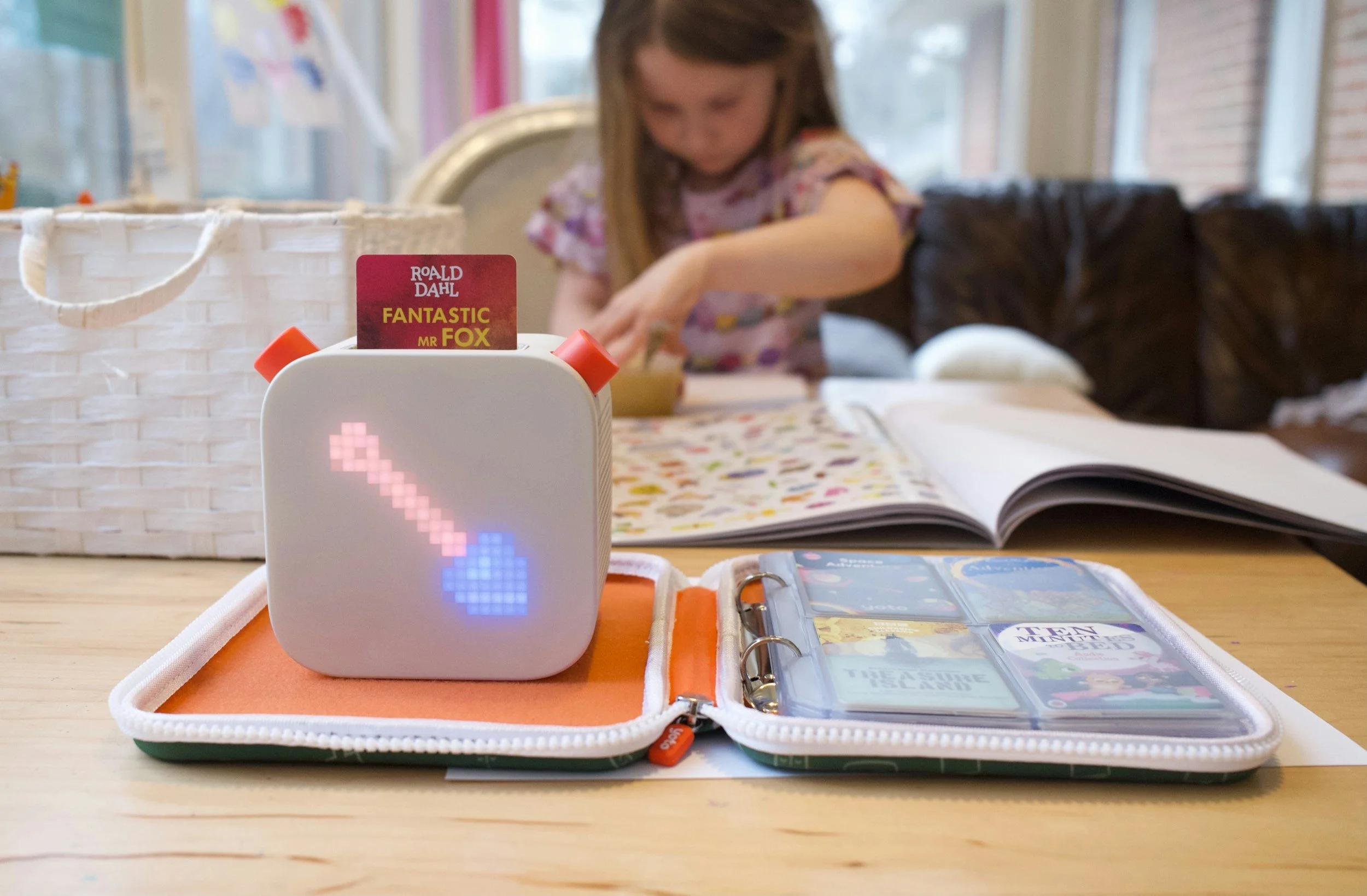
A Yoto Player in use
Audiobooks
His eyes are usually tired by the end of the day, and his vision definitely gets worse and sometimes even his love of reading can’t push it through. So we needed an alternative for those days and we discovered the Yoto Player.
I have seen a lot of takes online about if listening to an audiobook counts as reading and I strongly believe that it is – recent research by the National Literacy Trust lists the benefits from it being an immersive experience, inspiring creativity and being a great way to encourage reluctant readers.
For me though, the biggest benefit of audiobooks I think is learning pronunciation of words, vocabulary and grammar. Listening to an audiobook in this way is probably one of the only times you listen to sentences spoken in a full and grammatically correct way. Usually, when you speak conversationally, or you hear people talk on the TV, radio or podcasts, they use contractions, shortcuts and aren’t using perfectly constructed sentences, as it isn’t required to communicate in these forms. So listening to an audiobook in this way has the benefit of introducing listeners to a different way of vocabulary and speech.