Is Gruffalo Granny Accessible?
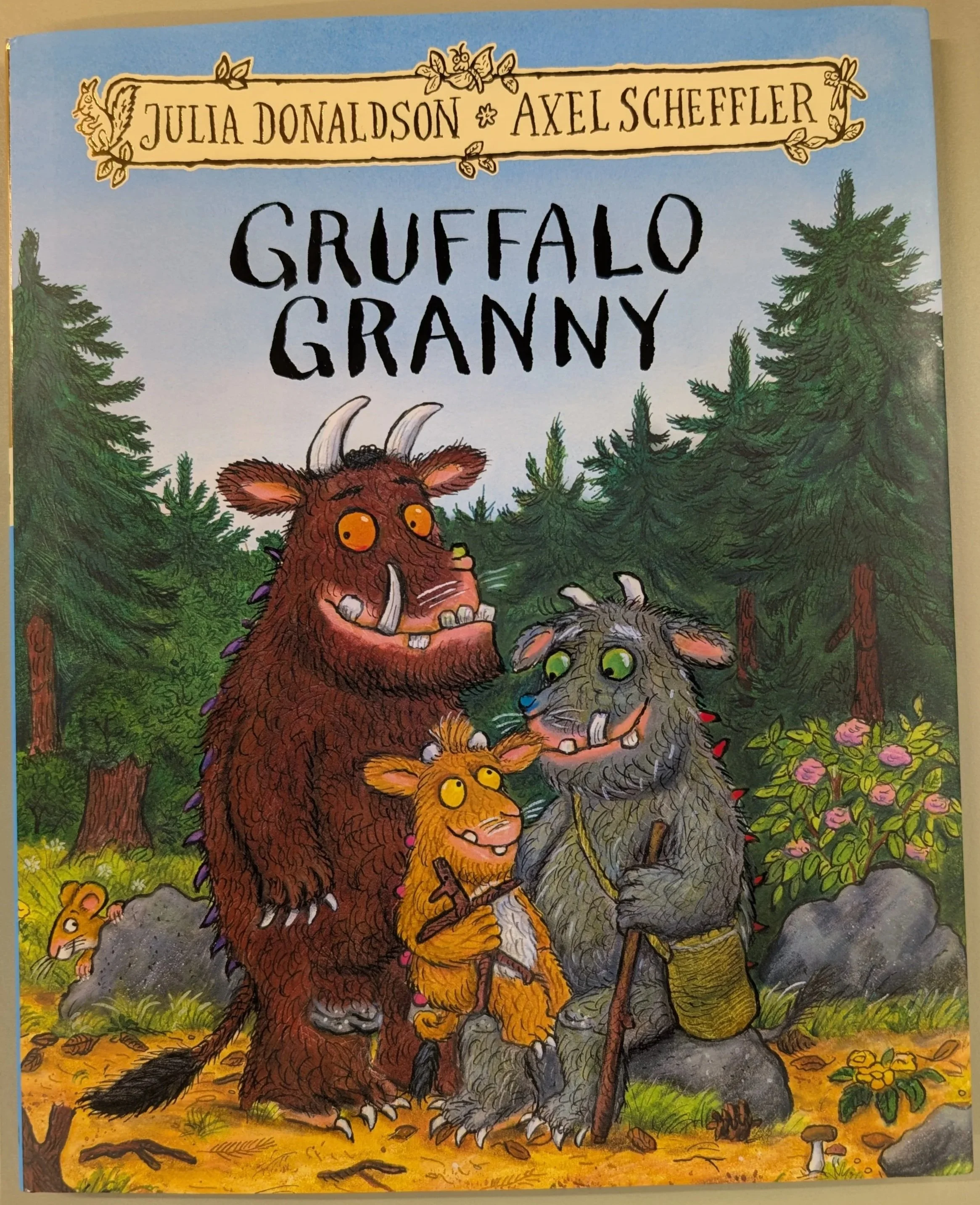
Like all parents with young children, I was very much looking forward to reading the new ‘Gruffalo Granny’* book from Julia Donaldson and Axel Scheffler. Two people who have shaped the early years of both my boys and given us many hours of entertainment and lovely bonding moments over a picture book.
They have both loved the Gruffalo and the Gruffalo’s Child in particular. My youngest often wore his much loved Gruffalo costume and I have read these books so much, I have developed quite strong, detailed opinions and concerns about the Mouse, which is for another post (I find Mouse slightly sinister, especially on the last page of the Gruffalo’s Child sat eating a nut outside the Gruffalo Cave).
I sat and read ‘Gruffalo Granny’ yesterday with my youngest son on our weekly coffee date (except all the coffee shops near us are closed on a Monday afternoon, so this actually took place in a pub). His reading has come on beautifully, and he confidently sounded out lots of whole sentences himself – nothing better in my opinion than to witness a child learning to read (circumstances mean I am experiencing this for the first time with my second child).
He loved it when he figured out the ‘Gruffalo Granny’ clues lead him to reveal that she was actually on the cover. When Mouse told his stories, he felt very proud and clever when he realised “Wait, I’ve read that book before!” Only Donaldson and Scheffler can be so delightfully self-referential like this: it added another level of nostalgic cosiness, and use known characters provides familiarity and comfort to any young reader which is so important when they are decoding and dealing with the unfamiliar and scary process of learning to read.
It’s a brilliant story, which feels like such a trite thing to say when you are considering the might and wonder of Donaldson’s and Scheffler’s contribution to the picture books, literacy and culture.
Do I have notes though? Yes.
Is it the same note I have with a majority of the Donaldson/Scheffler back catalogue? Yes.
Here’s my takeaway advice I have if you want to enjoy ‘Gruffalo Granny’ with your child:
Do not read this book with your child at bedtime.
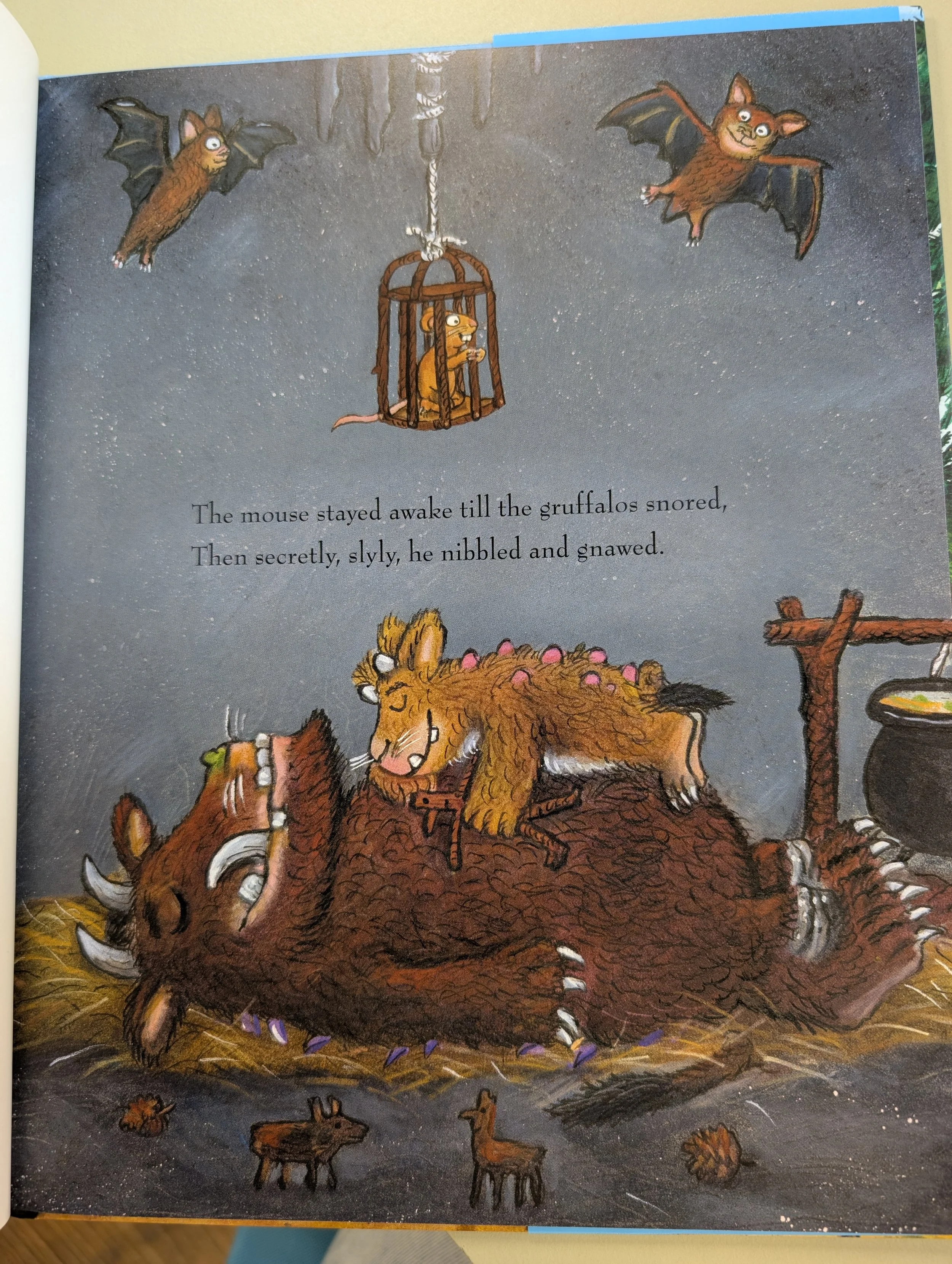
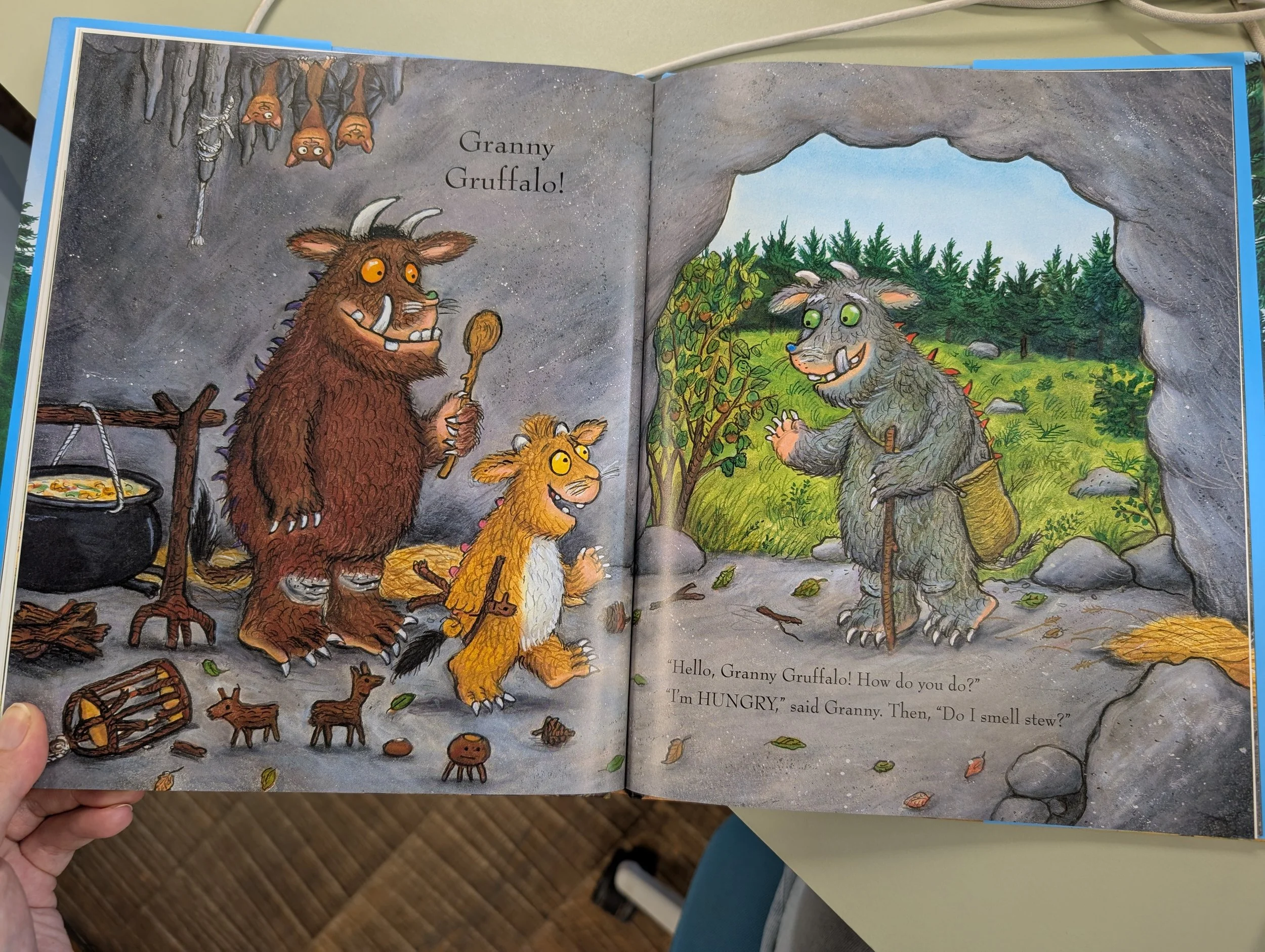
Please note: the images above have been taken in full overhead lighting in daylight, with a camera which adapts colour to create the best image. Plus you will likely see the images on a backlit screen, which does not reflect the reading experience from the page.
You will likely to be unable to read parts of this book in a bedtime environment.
There are 8 pages out of the total of 30 story pages where the black text is on top of a grey or dark blue background (26% of the total story): where the text colour is in very low contrast to the background colour. Which means, as I am sure every parent who has read a picture book to their child in the low, cosy light of bedtime and struggles to read or even see text against a dark background knows, is really difficult, if not impossible. Especially if you factor in the reflection and page glare given off by a glossy page.
What this means is that 26% of this book is not fit for purpose or legible, in one of the most common environmental settings that it will be read in.
Not only this, but it’s a big accessibility issue too. Those with low vision or other print disabilities will be unable to access these pages. For the young children who are using these stories that they love to start to recognise letters, sounds and words in their process of reading, it adds a needless level of difficulty to something they are newly learning and likely finding challenging.
To compound this further, this black text and dark background colour occurs at key moments of the story: the first page, the setup for the brilliant Mouse story mechanic, the entrance of Granny Gruffalo and the final page. The precise moments that attention and comprehension are required to follow the story.
People I have spoken to about pages such as this in picture books mention ‘skipping these pages entirely’ or avoiding reading the book altogether. Which given how wonderful this book is; how it and the other titles by Donaldson/Scheffler can and will be enjoyed for, likely, generations of children and adults together, is just a huge shame.
The impact and importance of Donaldson’s and Scheffler’s work in picture books and for young children’s literacy can not be understated. These books are a vital part of every child’s introduction to books and reading, which is why 26% of the book being illegible is such a big deal. These are books beloved, trusted by parents and children. They are the blueprint for success in this format, and so if for these issues to be present in a book such as this, is indicative of the format and industry as a whole.
You might think that perhaps Pan Macmillan (the publisher) has not considered accessibility for this titles. And that just isn’t true. Accessibility and access has been considered for this book. They have done all the “hard“ parts of accessible editions, as it were. They have consulted with RNIB and Living Picture Books Charity and those editions are available from the same publication date as the mainstream copy. Which is rare, as usually accessible editions are delivered much later. It is beyond amazing that visually impaired and blind children will be able to access this book at the same time as their sighted-peers; to join in with this cultural moment of excitement alongside their friends. It’s the type of inclusion and accessibility I have been trying to advocate for.
There is also an audiobook and guided edition read by Dame Imelda Staunton. It’s available in Braille too! It’s made all the right headlines and noises and I am and will be celebrating this.
It just doesn’t square with me very well that big money moves in accessibility have been considered, and yet practical legibility of the book in a day-to-day environment hasn’t been. In comparison, the small tweaks and changes that could be made to the mainstream edition so that the majority (all!) of people who come across this book with various needs, young children learning to read or parents with tired but 20/20 vision in low light, will have no barriers to the enjoyment of this book, are low cost. Low time.
The art has been drawn specifically for this book. The text written, edited, tweaked alongside the development of the illustrations specifically for this book. It could not have been easier to amend and take in these considerations as an amend, or even better, considered from the beginning of development.
Accessibility shouldn’t only be considered for ‘separate’ editions, though these are important. There is a way, and an easy way at that, to consider accessibility across all picture books, which will benefit not only those children disabilities and different access needs, but everyone who reads the book.
*The edition of ‘Gruffalo Granny’ by Donaldson and Scheffler, Macmillan Children’s Books I refer to in this post is the hardback edition, published in 2026.