Maddie and Triggs – Visual Impairment Representation on CBeebies
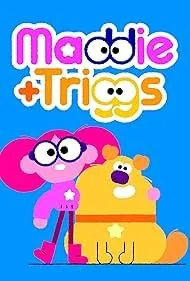
Copyright: Turnip + Duck; Sun & Moon Studios
I was scrolling the other day and I came across a video about a children’s TV show on CBeebies called ‘Maddie and Triggs’. It was a video of one of the consultants from the show was talking about how she helped to develop the show along with the production team at Turnip + Duck for RTÉjr and CBeebies. Colm Tobin, managing director from Turnip + Duck, has written an article about producing this show here, and it’s a good read and insight into the thought and care taken with this show.
The stated mission for Maddie and Triggs is:
If two children, one sighted and one vision-impaired, sit down to watch the show, neither should have a lesser experience.
My interest was peaked. Regular readers will know that my eldest son is visually-impaired, so it’s a world I’ve had a crash course in, but I have only experienced it from the outside.
I have watched a few episodes today and it is lovely, soft, imaginative and fun. What I appreciated most though, was that Maddie’s visual impairment isn’t the main part of her personality, or even the main driving force behind any of the action or plot of an episode. She is a girl with an imagination, a sense of fun who is exploring and learning about the world who just happens to be visually impaired. It’s not something that is focused on.
That point is extremely refreshing to see, not least because when I reflect upon my son’s visual-impairment, it informs a great many things about who he is, he is so much more than that, but also, he is simply a (nearly) 7-year-old boy who is learning about the world and himself.
We’re lucky enough to be in a phase of his development that his visual impairment is quite low on the list of things we think about day-to-day. It’s always there and something we manage for constantly, of course, but it’s fairly stable. As a family, we’ve adapted and we live our lives.
Do we have to remind him that we can not see through his head when he stands in front of the TV during movie night? Yes.
Has he strategically developed a way to use the fact he can’t see very well to his advantage when playing board games? Yes.
Did he lecture me the other day he barrelled into my bedroom at full speed while I was putting on my shoes, and he tripped over my shoe box? Yes. (“Are you aware that I am visually impaired, Mummy, and you should be more tidy?”)
Another thing I like about Maddie and Triggs is that the animation is bold, simple colours and shapes. It is not only look stunning and joyful from an aesthetic prospective, but it is an art style that is easy for those with visual impairments to see. It’s not visually cluttered; the action and movement on the animation doesn’t move quickly, so it’s easy and comfortable for the eye to focus. It beautifully supports the argument I have been making about how the design of children’s picture books, on the whole, only needs small changes to make them more accessible for those with visual impairments and other print disabilities. The books don’t need to look any less ‘designed’ or beautiful in a visual way, there are simple ways that they can be both accessible and beautiful. The approach to this animation reinforces how possible it is for accessibility to be aesthetically pleasing, as explored in the recent exhibition at the V&A museum: Design and Disability.
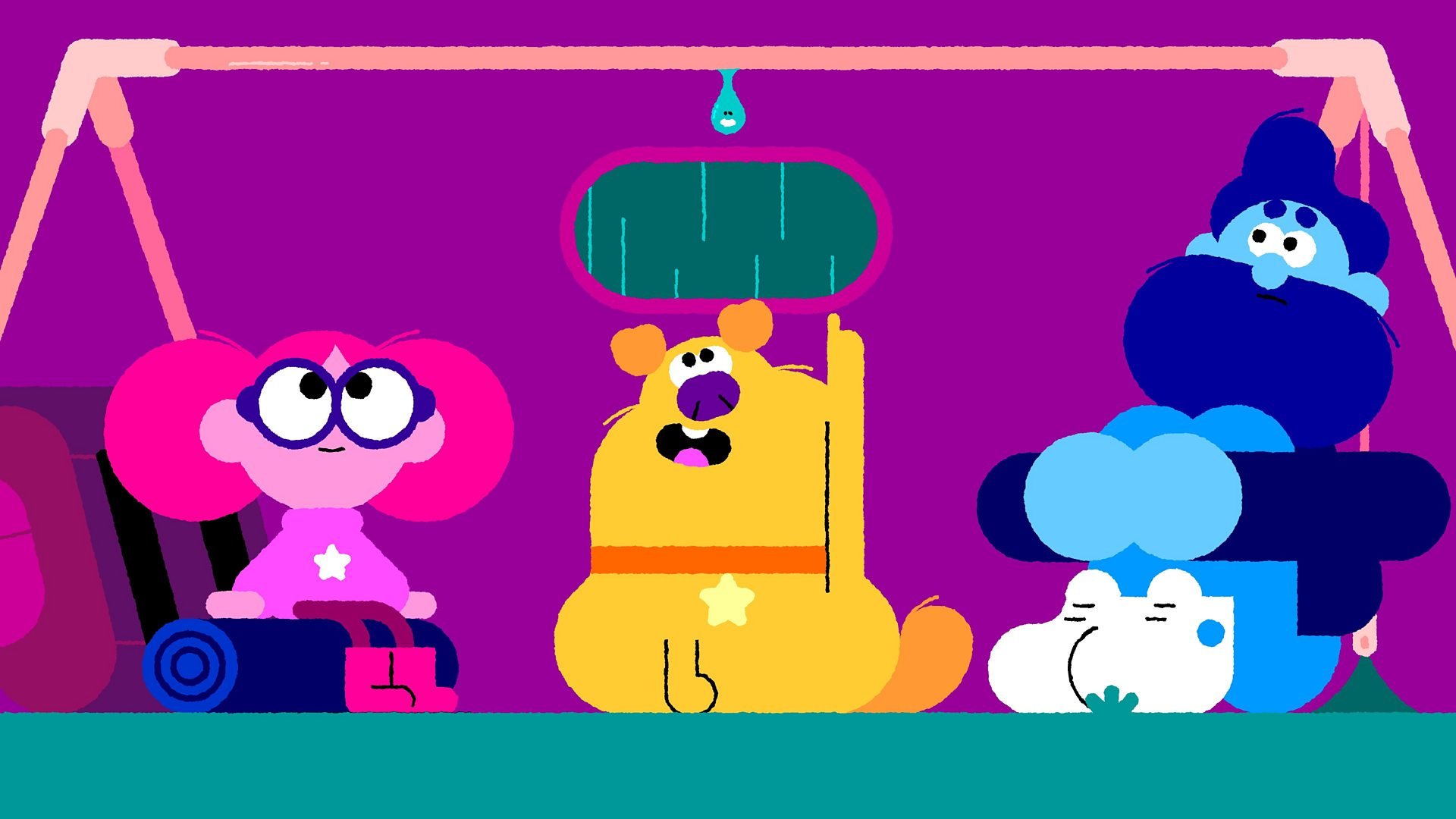
Maddie (left) is sat inside the tent with her dog, Triggs and her dad (right). A small window can be seen to the outside which shows that is raining. A small raindrop hangs from the top of the tent pole, which all three characters are looking at.
Finally, the existence of this show at all means that my son has access to representation of his disability on a TV show which is brilliant for all the usual reasons representation is important for us all. Particularly for him to know there are others like him out there (as we haven’t met another visually impaired child in real life yet), and that his disability (for want of a better phrase) is “worth” an animation studio and broadcaster creating a character and show around.
This show provides an opportunity for other children to learn about visual impairment as well, and hopefully start to understand it a little more; understanding and empathy for each other and the difference’s in how we each experience the world around us is fundamental pillar to our children building a better society for themselves to all thrive within.
I do wish this show had been around when he was younger and we were starting to navigate the world of visual impairment. I spent a lot of time worrying about how it might trap and limit him, especially socially, as a visual person who relays on vision as their primary sense, I could not imagine how life might be for him. But now, and as Maddie and Triggs marvellously illustrates, life for him is full, rich, possible and very occasionally, regular … regular for us anyway.